I love studying language. It is frustrating and sometimes feels like there is no progress at all, but it can be such a door into culture.
I love especially learning the idiomatic expressions and the different words that are related or build off each other. Usually these expressions take me longer to understand but when I do, it's an ah-ha moment because it just fits.
Here's a few examples:
-The term for confused is very similar to the term for spin around. I love this because it makes sense. If you spin around a bunch, when you stop you are disoriented and confused. That helped me remember these terms.
-The literal translation for "you're welcome" in the local language is "you're worthy". This adds so much more depth to the term "you're welcome". Each time you say it you are actually saying that the other person was worth whatever gift or task or inconvenience.
-There are certain verbs that are built from onomatopoeias. For example, the word for knocking is the sound that knocking makes turned into a verb. (I generally love learning about onomatopoeias, since different languages have different sounds. For example, the way people express being cold or laughing changes between languages. Animal sounds can also differ. If you have a friend from a different country, ask them what sound a rooster makes.)
-The local language I am learning is a dialect of the larger language that is particular to the country. So it differs slightly in the vocabulary commonly used (similar to how Spanish spoken in different countries uses different terms). The local word for egg is changed from the standard dictionary term. It is similar to the term for life. I am not sure if this is intentional or just a connection I picked up because I am not as well-versed in the language, but the connection helped me remember both of the terms.
Some of the terms that sound similar to me are not actually similar at all. This was a learning curve I had to get over to progress. I needed to learn to properly listen to the language. How we hear sounds is influenced by our brain trying to find meaning. So as I listened, I would unconsciously hear the sounds according to the English language and alphabet. I had to learn to listen to different nuances.
Here are a few mistakes I made before I understood some of the differences:
-I often got the word for camel and the word for grandfather mixed up since they sounded similar to me. Eventually I had to learn a different word for camel so I would not mix them up.
-The words for lick, swallow, and stir sounded similar to me. My language helper had a good laugh at me when I was trying to ask her questions about cooking and I kept saying things about licking the batter instead of stirring it.
You get glimpses at what the culture values based on what words it has and where there is or is not nuances. Learning synonyms deepens your understanding of the language and widens your ability to speak to people. But it can have a frustrating factor. If you learn too many synonyms at once, it can be confusing. In addition, if your language helper forgets which synonyms she teaches you and uses different ones in the next lesson, it can be very frustrating and confusing for you both until you figure out why you aren't understanding. I know this from personal experience. Later it became a funny story that I like to tease my language helper about, but in the moment I was so confused.
Nuance can be both enlightening and frustrating:
-I love learning that there are different verbs for specific situations. It is a bit like a puzzle. For example there is a specific word for when an animal hits its head into something; you shouldn't just use hit.
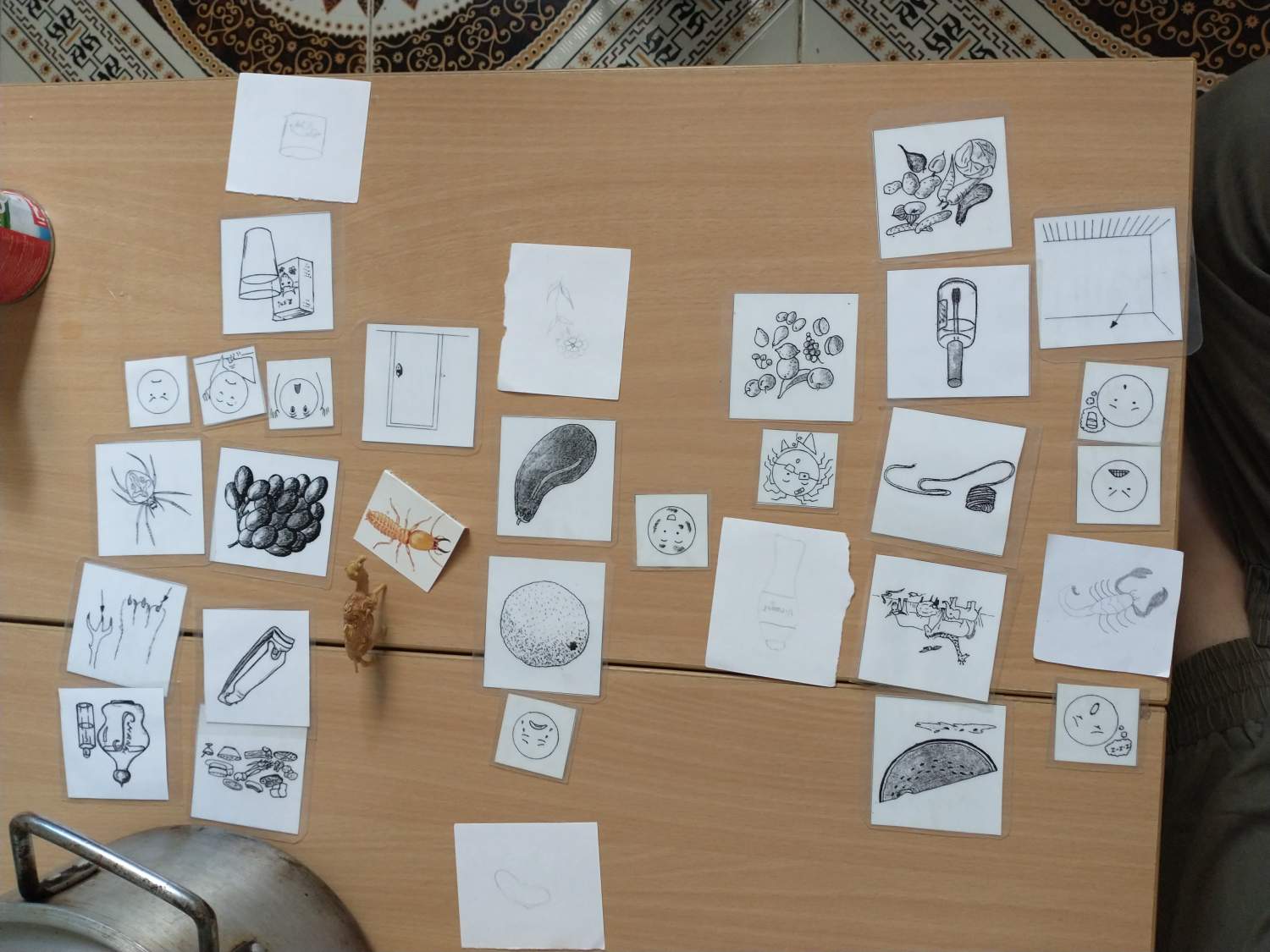
-There is a different word for if you are slapping something, hitting something, or hitting something with the intent to kill. I learned all these during a lesson about bugs.
-Sometimes the lack of nuance can be frustrating. For example, while there is a general term for woman, it is rarely used. Instead women are categorized into two groups: girls or wives.
I am still in the beginning phases of learning the language. It is not uncommon for me to be listening to something and get excited because I understood a third of the words. If I get the general gist of the conversation, it is a celebration. Often I would return to my language helper and try to describe a scene so that I could ask her about a specific word that I didn't understand but that I had forgotten. My language helper has the patience of a saint!
The progress is slow but the effort is worthwhile when I am able to have conversations and understand jokes and laugh with friends. It is worthwhile when I can ask for advice and get a better understanding of the culture. It is especially worthwhile when I can talk about the most important things, such as truth and justice and faith and love.